Choosing the right corrugated cardboard thickness for retail displays can be overwhelming. But it’s vital for creating sturdy, eye-catching displays that work long-term.
Corrugated cardboard thickness plays a critical role in retail display performance, influencing durability, load-bearing capacity, and cost-effectiveness.1 Understanding these factors ensures displays meet retail and branding requirements.

While this topic might seem technical, it’s essential for brands aiming to create standout retail displays in stores like Walmart, Target, or Costco. Let’s dive deeper.
What Is Corrugated Cardboard?
Corrugated cardboard is everywhere, but what makes it unique? It’s more than just thick paper.
Corrugated cardboard is composed of a linerboard and fluting medium, creating a layered structure with superior strength.2 This makes it ideal for retail POP displays compared to regular paperboard.
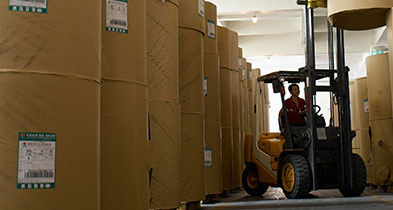
Unlike paperboard, corrugated cardboard has a unique structure combining inner “flutes” with outer liners. This design provides durability and weight-bearing capacity, making it perfect for retail environments. From countertop displays to pallet bins, corrugated cardboard offers the strength needed to withstand shipping, stocking, and store handling.
Its popularity stems from its versatility. Brands use corrugated cardboard for custom-designed displays because it supports high-quality printing, comes in various thicknesses, and meets environmental sustainability goals.3
Why Does Corrugated Cardboard Thickness Matter for Retail Displays?
Not all cardboard is created equal. Thickness impacts how a display performs in real-world conditions.
The thickness of corrugated cardboard determines its structural strength, weight capacity, shipping durability, and long-term stability in demanding retail environments like Costco and Target.4
Retail displays endure a lot—shipping, handling, and constant interaction from customers.5 Thicker boards offer higher structural strength, making them essential for heavy or bulk products. Particularly in big-box stores like Walmart or Sam’s Club, displays need to endure long-term use without bending, collapsing, or breaking.
Additionally, thickness helps protect products during shipping. Retailers often have strict requirements for display stability, as a display’s failure could lead to damaged goods and lost sales. Brands must carefully select cardboard thickness based on their product weight and retail environment.
What Are the Common Types of Corrugated Flutes?
Flutes are the backbone of corrugated cardboard. They determine thickness, cushioning, and more.
Corrugated flutes come in various types, including A, B, C, E, and F.6 Each type offers unique benefits for cushioning, printability, and retail display applications.
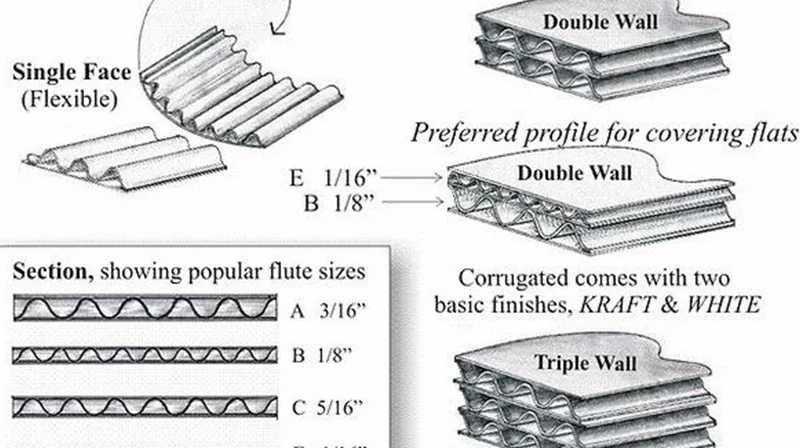
Here’s a breakdown of common flute types:
| Flute Type | Thickness | Cushioning | Printability | Stacking Strength | Common Applications |
|---|---|---|---|---|---|
| A Flute | Thickest | Superior | Moderate | High | Heavy-duty displays |
| B Flute | Medium | Moderate | Excellent | Moderate | Shelf-ready packaging |
| C Flute | Standard | Good | Good | High | General-purpose displays |
| E Flute | Thin | Moderate | Excellent | Low | Counter displays, premium packaging |
| F Flute | Thinnest | Minimal | Superior | Minimal | High-quality printing displays |
Each flute type serves specific needs. For example, E and F flutes excel in printability, making them ideal for promotional displays.7 Meanwhile, A and C flutes provide high stacking strength for heavier products. By balancing functionality and aesthetics, brands can select the ideal flute type.
How Do You Choose the Right Thickness for Different Retail Displays?
Different displays require different cardboard thicknesses. Here’s how to decide.
Choosing thickness depends on the type of retail display—counter displays, floor displays, pallet displays, dump bins, or shelf-ready packaging—and the weight and longevity of the products showcased.

Counter displays often use thinner cardboard like E or F flutes due to their lightweight nature and need for high-quality printing. Floor displays and dump bins, on the other hand, require thicker boards like C or A flutes to handle heavier loads and maintain stability.
Pallet displays used in bulk merchandising are especially demanding.8 These displays often require reinforced, multi-layer corrugated structures to withstand the weight of heavy or numerous products. Additionally, brands must consider whether displays will be temporary or permanent. Temporary displays can use thinner, cost-effective materials, while permanent ones require durable, thicker boards.9
Retail environment considerations also play a role. Displays in high-traffic areas need extra stability to avoid collapse or bending.10 Whether you’re showcasing snacks, cosmetics, or electronics, thickness selection should align with display purpose and location.
How Does Product Weight Affect Corrugated Board Selection?
Product weight is a key factor in choosing the right cardboard. Heavier products demand stronger boards.
Heavier products like beverages, household items, or electronics require reinforced corrugated boards with multiple layers to ensure display durability and avoid collapse.11

Here’s how product categories influence board selection:
- Snacks and Beverages: Often lightweight, requiring moderate thickness for stability and protection.
- Cosmetics: Lightweight but delicate, benefiting from thinner boards with superior printability like E flutes.
- Electronics: Heavy and fragile, needing multi-layer corrugated structures for protection during shipping and display.
- Household Products: Medium to heavy, requiring reinforced materials for long-term stability in store environments.
- Toys: Variable weights, necessitating custom thickness based on product size and retail location.
Load-bearing requirements often dictate whether brands opt for single-layer or multi-layer boards. Multi-layer corrugated designs offer additional reinforcement, ensuring displays don’t collapse or bend under weight.12 These considerations are particularly crucial in big-box retail environments.
Conclusion
Selecting the right corrugated cardboard thickness for retail displays ensures durability, stability, and product protection across various retail environments like Costco and Target.
"Investigating the Effect of Perforations on the Load-Bearing Capacity ...", https://pmc.ncbi.nlm.nih.gov/articles/PMC11396172/. This source explains how corrugated cardboard thickness impacts durability, load-bearing capacity, and cost-effectiveness in retail displays. Evidence role: mechanism; source type: education. Supports: Corrugated cardboard thickness significantly affects retail display performance in terms of durability, load-bearing capacity, and cost-effectiveness.. ↩
"Corrugated fiberboard - Wikipedia", https://en.wikipedia.org/wiki/Corrugated_fiberboard. This source describes the composition of corrugated cardboard, including its linerboard and fluting medium structure. Evidence role: definition; source type: encyclopedia. Supports: Corrugated cardboard is made of a linerboard and fluting medium, which together create a strong, layered structure.. ↩
"Benefits of Using Corrugated Cardboard for Custom Displays", https://www.creativedisplaysnow.com/benefits-cardboard-custom-displays/. This source discusses the advantages of corrugated cardboard for custom-designed displays, including printability, thickness options, and sustainability. Evidence role: general_support; source type: research. Supports: Corrugated cardboard is favored for custom-designed displays due to its printability, thickness variety, and sustainability.. ↩
"Estimation of the Compressive Strength of Corrugated Board Boxes ...", https://pmc.ncbi.nlm.nih.gov/articles/PMC8467740/. This source discusses how corrugated cardboard thickness influences structural strength, weight capacity, and durability in retail settings. Evidence role: mechanism; source type: research. Supports: Corrugated cardboard thickness affects structural strength, weight capacity, and durability in retail environments.. ↩
"In-Store Compliance & Sustainability in Retail - The Challenges", https://www.verticalvendors.com/in-store-compliance-part-1. This source outlines the challenges retail displays face, including shipping, handling, and customer interaction. Evidence role: general_support; source type: education. Supports: Retail displays face challenges such as shipping, handling, and customer interaction.. ↩
"Corrugated Box Flute Types Explained: A, B, C, E & F", https://www.onyxpackaging.com/blog/corrugated-box-flute-types.php. This source categorizes the different types of corrugated flutes and their applications. Evidence role: definition; source type: encyclopedia. Supports: Corrugated flutes are classified into types such as A, B, C, E, and F, each with unique characteristics.. ↩
"Corrugated Box Flute Types Explained: A, B, C, E & F", https://www.onyxpackaging.com/blog/corrugated-box-flute-types.php. This source explains the printability advantages of E and F flutes for promotional displays. Evidence role: mechanism; source type: research. Supports: E and F flutes are particularly suited for promotional displays due to their superior printability.. ↩
"How Much Load Can My Pallet Carry?", https://unitload.vt.edu/education/white-papers/5-wp-load-carrying-capacity-of-pallets.html. This source highlights the structural demands of pallet displays in bulk merchandising environments. Evidence role: mechanism; source type: research. Supports: Pallet displays in bulk merchandising require robust structural designs to handle heavy loads.. ↩
"Temporary vs. Permanent Displays: A Retail Guide", https://mmqualitysolutions.com/temporary-vs-permanent-displays-a-retail-guide/. This source differentiates between material requirements for temporary and permanent retail displays. Evidence role: mechanism; source type: education. Supports: Temporary displays use thinner materials, whereas permanent displays require thicker, more durable boards.. ↩
"Traffic Congestion and Reliability: Trends and Advanced Strategies ...", https://ops.fhwa.dot.gov/congestion_report/chapter2.htm. This source explains why displays in high-traffic areas require additional stability to prevent collapse or bending. Evidence role: mechanism; source type: research. Supports: High-traffic retail areas necessitate stable displays to prevent collapse or bending.. ↩
"Corrugated fiberboard - Wikipedia", https://en.wikipedia.org/wiki/Corrugated_fiberboard. This source discusses the need for reinforced corrugated boards for heavy products like beverages and electronics. Evidence role: mechanism; source type: research. Supports: Heavy products require reinforced corrugated boards to maintain display durability and prevent collapse.. ↩
"Corrugated board grades explained: types of cardboard - GWP Group", https://www.gwp.co.uk/guides/corrugated-board-grades-explained/. This source explains how multi-layer corrugated designs provide reinforcement to prevent display collapse. Evidence role: mechanism; source type: research. Supports: Multi-layer corrugated designs enhance reinforcement, preventing collapse or bending under weight.. ↩